

5 min read
A rental listing’s advertised cap rate is only as good as the numbers behind it, and those numbers are usually the seller’s estimate, not a verified figure. Before you make an offer on a rental property in Boyle, Garrard, Lincoln or Mercer County, there are four things worth checking yourself: the actual utility costs, the real cost of management, what your financing will actually require, and how property tax works differently on a rental than it does on a home you live in.
Verify utility costs yourself, not the listing’s estimate
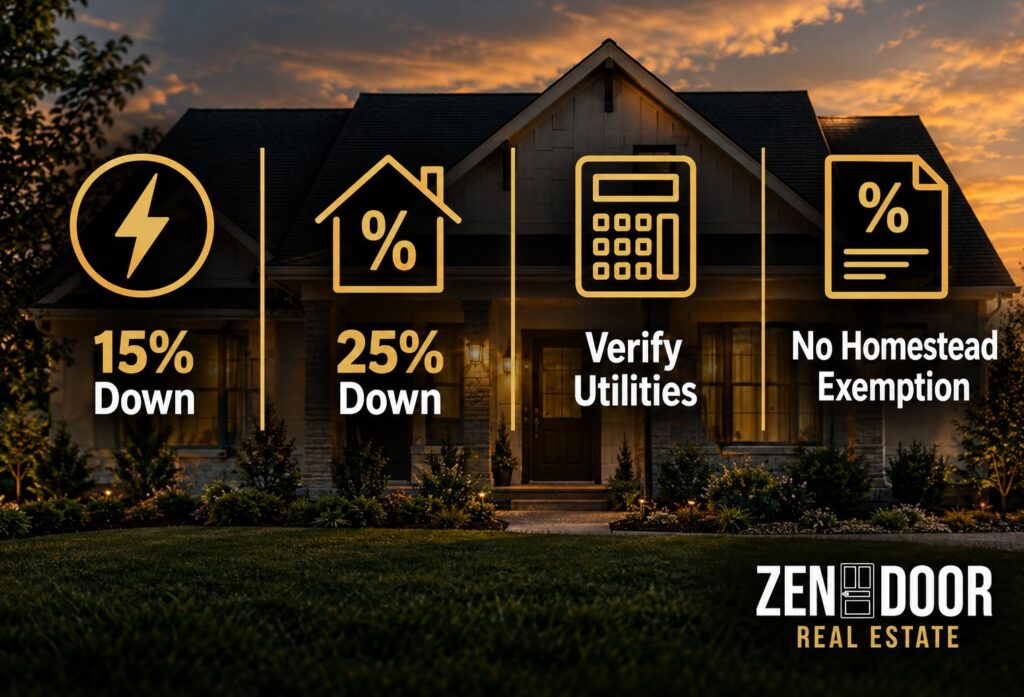
A listing’s stated utility cost is frequently a rough estimate or a figure from a different season. Before you commit to a purchase price, request the seller’s actual utility bills, or call the utility provider directly for the property’s billing history. A property with inconsistent or aging mechanical systems can run utility costs well above what a one-line listing estimate suggests, and that difference changes your real monthly cash flow, not just a footnote in a spreadsheet.
Price out self-management against a property manager, with real numbers
Every rental proforma has to answer one question early: are you managing this yourself, or paying someone else to. A property management company typically charges a percentage of collected rent plus a leasing fee when a unit turns over, and the exact structure varies by company. Call two or three Central Kentucky property managers directly and get their actual fee schedule rather than assuming a number from a national article, since management cost is one of the biggest swing factors in your net operating income (NOI).
Self-managing changes that math, but it is not without a real cost of its own. It trades a management fee for your own time: handling maintenance calls, screening tenants, and being the one a tenant calls at ten at night. Price your own time honestly before assuming self-management is the better deal.
Know what financing actually requires
Conventional financing treats an investment property differently than a primary residence, and the difference shows up at the down payment. Under Fannie Mae’s own eligibility matrix, a conventional purchase loan on a 1-unit investment property requires a minimum 15 percent down payment, and a 2 to 4-unit investment property requires a minimum 25 percent down payment. Both figures assume standard conforming guidelines; your lender’s specific program, credit profile, and reserve requirements can add further conditions on top of these minimums.
That difference matters when you are comparing a single-family rental against a small multifamily property. A fourplex can produce more total rent, but it also requires significantly more cash at closing under standard financing. Run both scenarios with your lender before you decide which property type fits your actual capital.
Property tax works differently on a rental
A home you live in as your primary residence may qualify for Kentucky’s homestead exemption if you are 65 or older or totally disabled, which reduces the assessed value before tax is calculated. A rental property does not qualify for that exemption under any circumstance, since it requires the owner to occupy the home as a personal residence. Build your property tax line into your proforma at the full assessed value and the full combined rate for that property’s tax district, with no exemption reducing it.
The tax bill and collection schedule otherwise work the same way they do for any property in these counties: the PVA sets the assessment, and the Sheriff’s office (or, in some districts, a separate school bill) collects the tax. Confirm the specific tax district and rate for the property you are considering before you finalize your numbers.
Build the proforma before you fall for the headline number
None of this means a rental property in Central Kentucky is a bad investment. It means the headline cap rate on a listing is a starting point, not a verified figure. The properties that actually perform the way a proforma says they will are the ones where someone checked the real utility bills, got an actual management quote, confirmed the real financing requirement, and built the tax line correctly, before the offer went in, not after closing.
Thinking about a rental property in Central Kentucky?
We can walk through the numbers with you before you make an offer
Dan Peters has built full investor proformas on Central Kentucky properties, comparing financing scenarios and self-management against professional management, and can do the same for a property you are considering.